


Key Takeaways:
- Patient adoption of healthcare technology improves healthcare efficiency and patient engagement.
- Technology reduces paperwork, hospital visits, and travel costs, eventually improving efficiency.
- Wearable devices and remote monitoring enable real-time health tracking and faster medical intervention when problems arise.
Healthcare delivery is increasingly shifting toward a patient-driven, technology-enabled model. Patients today expect healthcare services to be as accessible and convenient as other digital services they use daily, such as banking or online shopping.
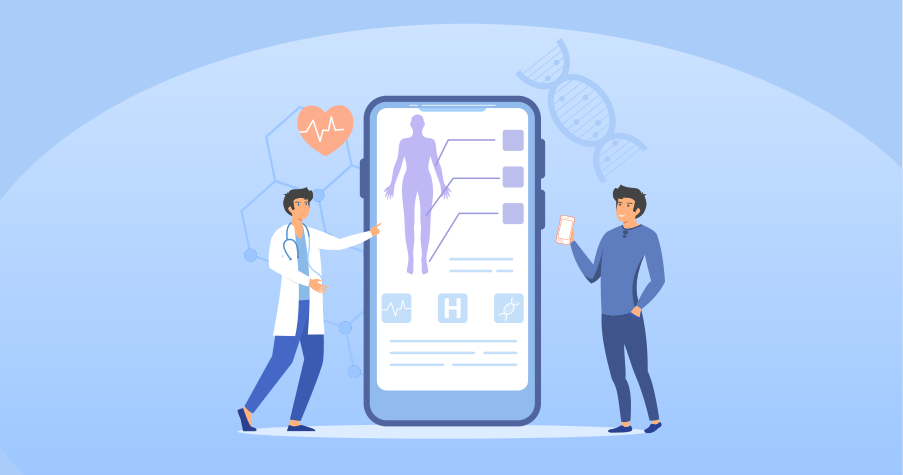
As a result, healthcare organizations are integrating digital tools like patient portals, telehealth platforms, remote monitoring devices, and mobile health (mHealth) apps to support patient engagement and improve care delivery.
So what health tech tools are patients using that practices can implement now for better efficiency and cost savings? Patient portals, patient kiosks, and virtual care applications are the answers. Read on this blog to learn how patient adoption of health tech is bringing efficincy for medical practices.
Why is Patient Adoption of Health Technology Important?
Just imagine the present-day healthcare system without health tech. Your patient with hypertension reviews his blood pressure reports occasionally during the in-person routine check-ups. If his health worsened during the appointment, you would not know till he visits you at the next appointment.
Now consider the same patient with healthcare technology. Through wearable devices and mobile health apps, your patients can track their blood pressure readings and share them automatically with you.
Digital healthcare solutions also offer patients tools like patient portals, where patients can review lab results and request prescription refills. The plus point is that if at any point the readings go abnormal, you can immediately intervene through telemedicine.
Core Digital Tools Driving Modern Healthcare
Modern medical practices are transforming vision into reality with the integration of modern technological tools. Here’s a list of a few tools that have revolutionised the modern healthcare landscape.
1. Patient Portals
Communication gaps between you and your patient can lead to distress and even information loss. But you can make your patients’ lives easier by introducing them to patient engagement tools like patient portal software.
Strong patient portals for medical practices help physicians narrow down the communication gaps while improving patient engagement and satisfaction. By enabling secure messaging, portals reduce phone volume and allow structured, documented communication within the patient’s record.
2. Telemedicine platforms
Did you know your patients can now replace the 2 to 4 hours of travel time with 30 minutes of a virtual meeting? Both will work the same way, but telemedicine software for medical practices makes the process more time- and cost-efficient.
Now your patients can easily cut out the unnecessary steps, including travelling, paperwork, and long waiting rooms. It’s not only the patients, but telemedicine is also playing a crucial role in alleviating physician burnout.
A 2024 study on telemedicine published in the International Journal of Medical Informatics revealed that telemedicine integration also helps in redistributing the workload among all staff members and alleviating physician workload. It has also been shown to reduce travel time and cost for patients.
3. Mobile Health Apps
If you also feel frustrated about your clinical systems, which have tied you to your desktop and clinic hours, it's high time you consider mobile health apps. For instance, the Practice EHR app for doctors has significantly alleviated workload and streamlined the documentation process.
With mobile health apps, you don't have to stick to your desktop to manage your day. You can now check crucial practice analytics, updated notes, and access patient information anywhere and anytime. Practices that use mobile health apps have observed a visible growth in their revenue by 15 to 20%.
4. Wearable Health Tools
Wearable health technology is an emerging trend in the healthcare industry. Research shows that about 40% of Americans are relying on wearable tech to stay updated on their health status.
With wearable tech, your patients don't have to visit clinics for routine screening and tests. Research published by the Journal of Medical Internet Research shows that wellness gadgets can screen blood for cancer levels or detect electrolyte levels. Your patients can
These smart devices are part of the Internet of Medical Things (IoMT), where devices connect with each other.
5. Patient Kiosks
Instead of waiting for hours in queues and filling out paperwork, patients can now make their check-in faster. Patients use kiosk technology to enter their credentials and other insurance details. All the information gathered is automatically synchronized with your clinic’s system. This makes it accessible to the medical staff.
A digital tool like a patient kiosk eliminates the need for paper forms and relevant inefficiencies. It improves the check-in process for the patients and improves overall practice management.
Patient Adoption of Health Tech Transforming Modern Healthcare
The evolving healthcare landscape calls out for digital tools to make healthcare efficient and accessible. By integrating advanced technology, small practices can streamline and automate most of their tasks, improving practice productivity.
Modern medical practices are integrating EHRs, providing small and private medical practices with the digital tools they require to thrive. One such software is Practice EHR, which has been supporting such practices with essential digital tools like never before.

.svg)
